
Doodle Teez or Blog
SherringenergyTeez is a creative endeavor to make a visual resource of energy medicine and this blog spot is a place to share information and stories with our personal journey to understanding energy medicine. Sharing everything energy and anything creative that makes remembering easier and fun. Doodle, Teez or Blog will be sometimes doodles, sometimes drawings, sometimes blogs, cheatsheets of energy techniques or research study breakdowns and wearable conversation starters with a some kind of energy connection. A place to learn how energy has a relationship in the physical world having a way to easily share.
Making energy visible is the goal and sharing is the vehicle ...

Vibrotactile Trigger Technology:
 Sherri A. Nicholas
A simple breakdown of a small EEG study on haptic vibrotactile trigger technology.
What Happens to the Brain When You Wear a Vibrotactile Sleeve?
A simple breakdown of a small EEG study on haptic vibrotactile trigger technology and what it might mean for the brain.
Published in Neurology & Neuroscience
Vibrotactile Trigger Technology: How a patterned compression sleeve may affect brain wave activity
Introduction
The ENHANCE study looked at a very specific question: can a special compression sleeve with built-in haptic vibrotactile trigger technology change brain activity in healthy adults? To find out, researchers compared brain scans from a baseline EEG to a second EEG taken after people wore the sleeve on their dominant forearm for about 20 minutes.
This matters because the study is trying to connect touch, skin stimulation, and brain networks in a way that could one day support non-drug approaches to wellness. But the study also makes it clear that the exact mechanism is still being investigated.
What the study was trying to test
The basic idea behind the study is simple: touching the skin in a patterned way may send signals through the nervous system and affect how the brain behaves . The authors describe haptic vibrotactile trigger technology, or VTT, as a non-invasive pattern built into a compression sleeve that is meant to stimulate the skin and possibly influence cognitive networks.
In plain English, the researchers wanted to know whether putting this sleeve on the arm would do more than just feel different. They wanted to see whether it would actually show up in brain wave activity measured by EEG.
How the study was done
This was a prospective, IRB-approved study in 20 healthy volunteers ages 17.6 to 41.9 years old. There were 7 females and 13 males. The sleeve was placed on the subject’s dominant arm, which was the right arm for 16 participants and the left arm for 4 participants.
Here’s the process in simple terms:
- The participants sat still with their eyes closed.
- Researchers recorded a baseline EEG for about 5 minutes using 19 scalp electrodes placed in standard 10/20 locations.
- Then the person wore the eSmartr Smart Compression Sleeve on the dominant forearm for about 20 minutes.
- A second EEG was recorded under the same eyes-closed condition.
- Researchers compared the brain activity before and after using surface EEG analysis and LORETA, which is a method that estimates where signals may be coming from inside the brain.
So this was not a long-term therapy trial. It was more like a before-and-after brain activity check.
What the researchers found
The study reported statistically significant differences between the baseline EEG and the EEG after the sleeve was worn, both in the surface EEG and in the LORETA current sources.
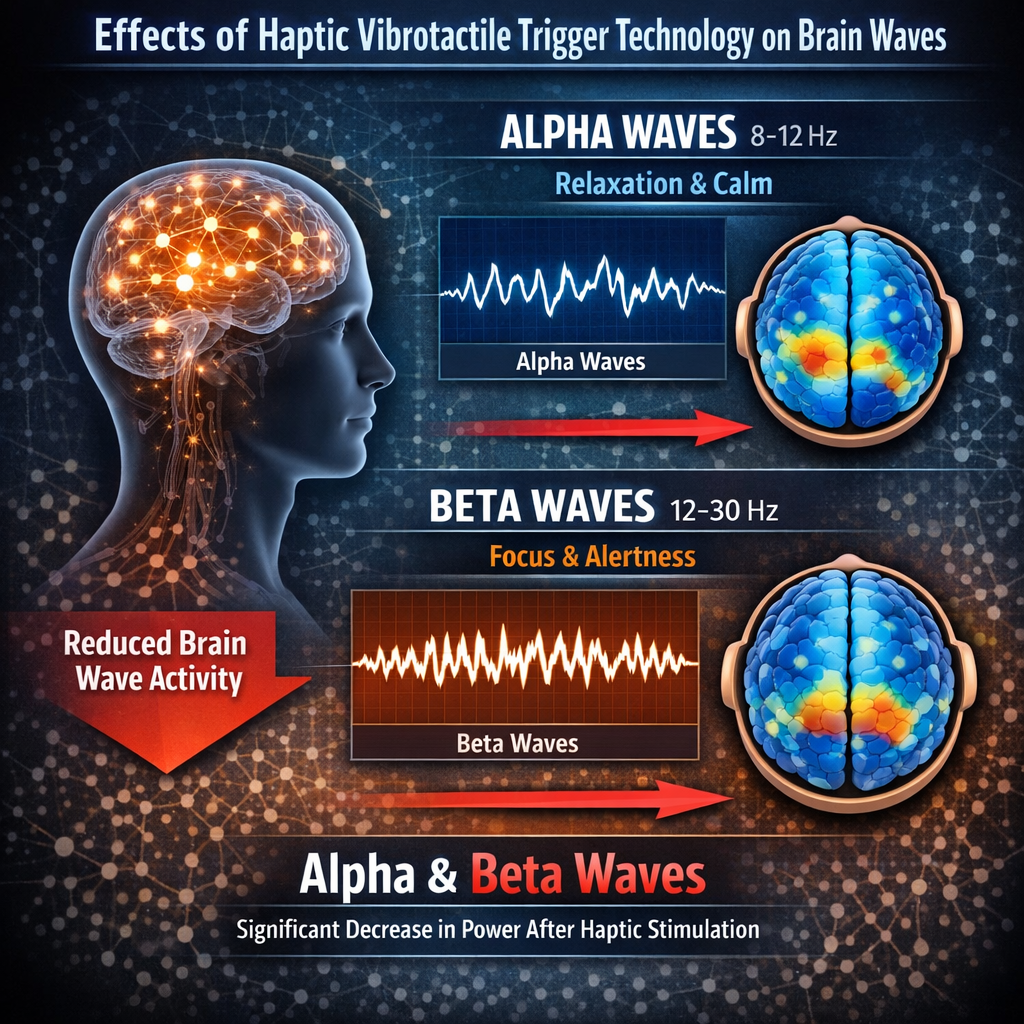
The biggest changes showed up in the alpha and beta frequency bands, with a strong downregulation in those bands when the sleeve was on . In simple terms, the brain waves linked with relaxed alertness, attention, and active thinking shifted after the sleeve was applied.
The strongest effects were seen in the left hemisphere, especially in the left frontal and left temporal regions . The paper also says the default network and attention network showed noticeable changes.
Another important finding was that the patterned sleeve seemed to affect the somatosensory cortex, especially the area that maps the arm, which supports the idea that the sleeve was doing something through touch and skin stimulation rather than through random noise.
What those results might mean
This is the part where the study gets interesting, but also where we need to be careful. The authors believe the sleeve may influence cognitive networks, including areas related to executive function, memory, attention, mood, and information flow.
In everyday language, that means the sleeve may be nudging the brain into a different activity pattern through the skin and nervous system . The paper suggests the left and right hemispheres may have responded differently, with the left side showing stronger changes and the right side showing more integration in some measures.
But the study does not prove that the sleeve improves memory, focus, sleep, or mood in real life. It only shows that the EEG patterns changed after the sleeve was worn. That’s a big difference.
So the safest way to say it is this:
the sleeve may influence brain activity, but we still do not know whether those changes lead to meaningful benefits for people in daily life.
Brain networks identified in the study
The paper says the sleeve influenced multiple cognitive networks, with the strongest effects in the medial somatosensory cortex and the default network, and also noticeable changes in the attention network . It also reports strong effects in the left frontal and left temporal areas, plus the anterior cingulate and parahippocampal gyrus.
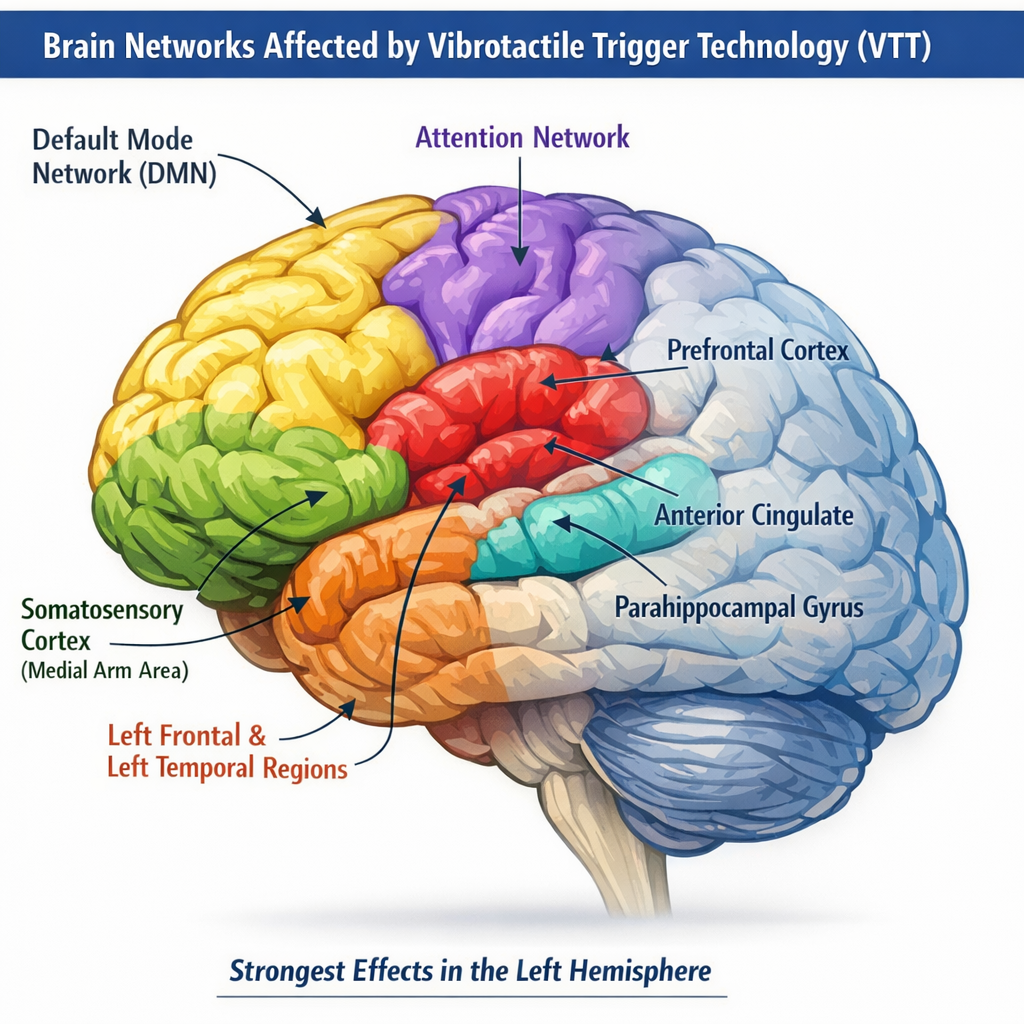
Default Mode Network: It’s like the brain’s “background thinking mode.”
This is the network that tends to be active when you are not focused on the outside world, like when your mind is wandering or you’re thinking about yourself.
The study says the sleeve was linked to changes in this network, which the authors interpret as possibly reducing “self-narrative” or mental drifting and helping attention shift outward.
Attention Network: It’s like the brain’s “spotlight.”
This network helps you focus on what matters right now and ignore distractions.
The paper says this network changed after the sleeve was worn, suggesting the stimulation may have affected how the brain handles attention.
Somatosensory Cortex: It’s the brain’s “touch sensor” area.
This is the brain area that processes touch, pressure, and body sensation .
The study found strong effects on the medial bank of the somatosensory cortex, especially the part that maps the arm on the brain’s body map, also called the homunculus . That makes sense because the sleeve was worn on the forearm.
Left Frontal and Left Temporal Regions
The strongest surface EEG effects were in the left hemisphere, especially the left frontal and left temporal areas .
These regions are tied to things like planning, thinking, language, and organizing information.
Anterior Cingulate and Parahippocampal Gyrus
The paper says these areas also showed changes .
In simple terms:
- Anterior cingulate helps with attention, decision-making, and control
- Parahippocampal gyrus is involved in memory-related processing
Prefrontal Cortex
The discussion says the results may involve the prefrontal cortex, which is important for executive function — basically planning, self-control, and decision-making.
Brain waves affected in the study
The biggest finding was a downregulation, or decrease, in alpha and beta activity after the sleeve was worn .
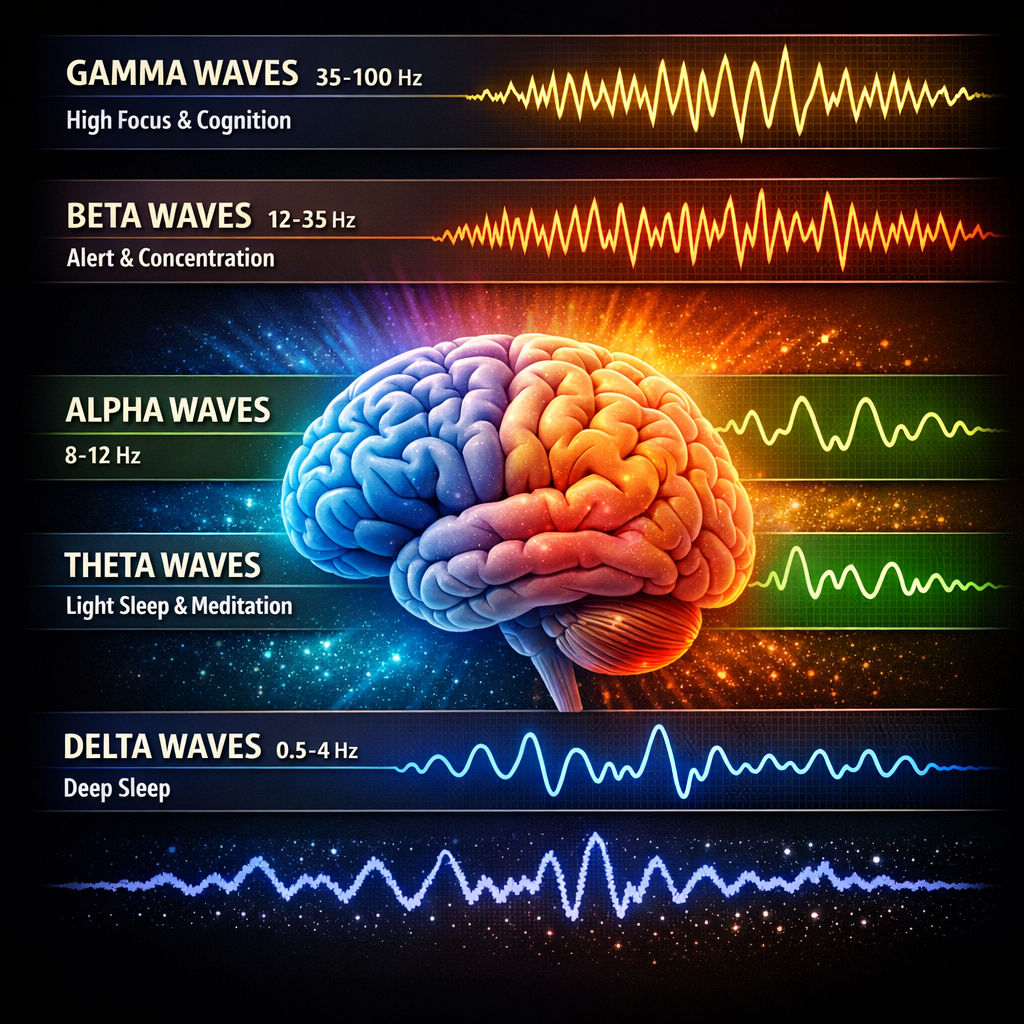
Alpha waves (8–12 Hz)
These were the strongest and most consistent changes in the study.
Alpha waves are usually linked to a calm, awake state — especially when your eyes are closed.
Simple meaning:
The brain was showing a different kind of resting pattern after the sleeve was applied.
Beta waves (13–30 Hz)
Beta waves were also strongly affected, with the paper saying there was a noticeable downregulation of beta power .
Beta is often tied to active thinking, alertness, and mental effort .
Simple meaning:
The sleeve seemed to change the brain’s “busy thinking” rhythm too.
Theta waves (4–7 Hz)
Theta was not one of the main findings in this study.
The paper mostly emphasizes alpha and beta, not theta.
Delta waves (0.5–4 Hz)
Delta also was not a major effect in the awake recordings from this study.
The paper even notes that the results were more consistent with an independent somatosensory mechanism rather than delta wave involvement.
Gamma / High-frequency oscillations
The paper discusses gamma and higher frequencies in general, but the main reported effects of this sleeve were alpha and beta, not gamma.
What the brain wave changes mean in plain English
The study suggests that wearing the patterned sleeve may have pushed the brain into a different communication state — especially in networks linked to:
- attention
- memory
- executive function
- sensory processing
- information flow
The authors also say the EEG coherence showed reduced connectivity in the left hemisphere and increased coherence in the right hemisphere, especially in the alpha band . In simple terms, the brain’s communication pattern changed — not necessarily “better” or “worse,” just different.
- Main brain networks affected:
default mode network, attention network, somatosensory cortex, frontal/temporal regions, anterior cingulate, parahippocampal gyrus, and prefrontal cortex
- Main brain waves affected:
alpha and beta waves, with alpha showing the strongest effect
- Main pattern:
less alpha and beta power, plus shifts in brain connectivity, especially on the left side
Why the study is promising, but still limited
The authors are hopeful, and they say the results are encouraging . They also suggest that if future research confirms these findings, the technology could become a non-drug, non-invasive tool for different applications.
Still, there are some clear limits:
- The sample size was small at only 20 people.
- The participants were healthy adults, not people with a medical condition.
- The report describes a short-term test, not a long-term outcome study.
- The authors say the mechanism of action is still being investigated.
- The study was funded by Srysty Holdings Inc., and some authors received compensation related to the work.
That doesn’t automatically make the results wrong, but it does mean readers should treat the findings as early-stage research, not final proof.
Simple Takeaway
The ENHANCE study found that wearing a VTT-patterned compression sleeve on the forearm was linked to measurable changes in EEG brain activity, especially in the alpha and beta bands and in networks related to attention and the default mode system .
In plain English: the skin may be talking to the brain more than people realize.
But the study is still at the “interesting signal” stage, not the “proven treatment” stage.
Conclusion
The ENHANCE study is a good example of how researchers are exploring the connection between touch, nerves, and brain networks . It suggests that a patterned compression sleeve can change brain wave activity in healthy people, especially in areas tied to attention and somatosensory processing .
That said, the study is small, short-term, and does not yet prove real-world benefits . If future research backs it up, this kind of technology could become part of a broader non-invasive wellness approach .
For now, the main message is simple: the brain may respond to patterned touch in measurable ways, but we still need more research before calling it a solution .
Summary
- The study tested whether a special sleeve could affect brain activity measured by EEG .
- It used 20 healthy adults and compared baseline EEG to EEG after wearing the sleeve .
- The biggest changes were in alpha and beta brain-wave bands .
- Effects were strongest in the left hemisphere, especially frontal and temporal areas .
- The default mode network and attention network also changed .
- The study is promising, but it does not prove long-term benefits .
Metaphor for Understanding
Think of the brain like a city with traffic lights and roads. The sleeve is like a small outside signal that may change how traffic moves through some of those roads. The study suggests the signal changed the traffic pattern, but we still don’t know if that made the city run better overall .
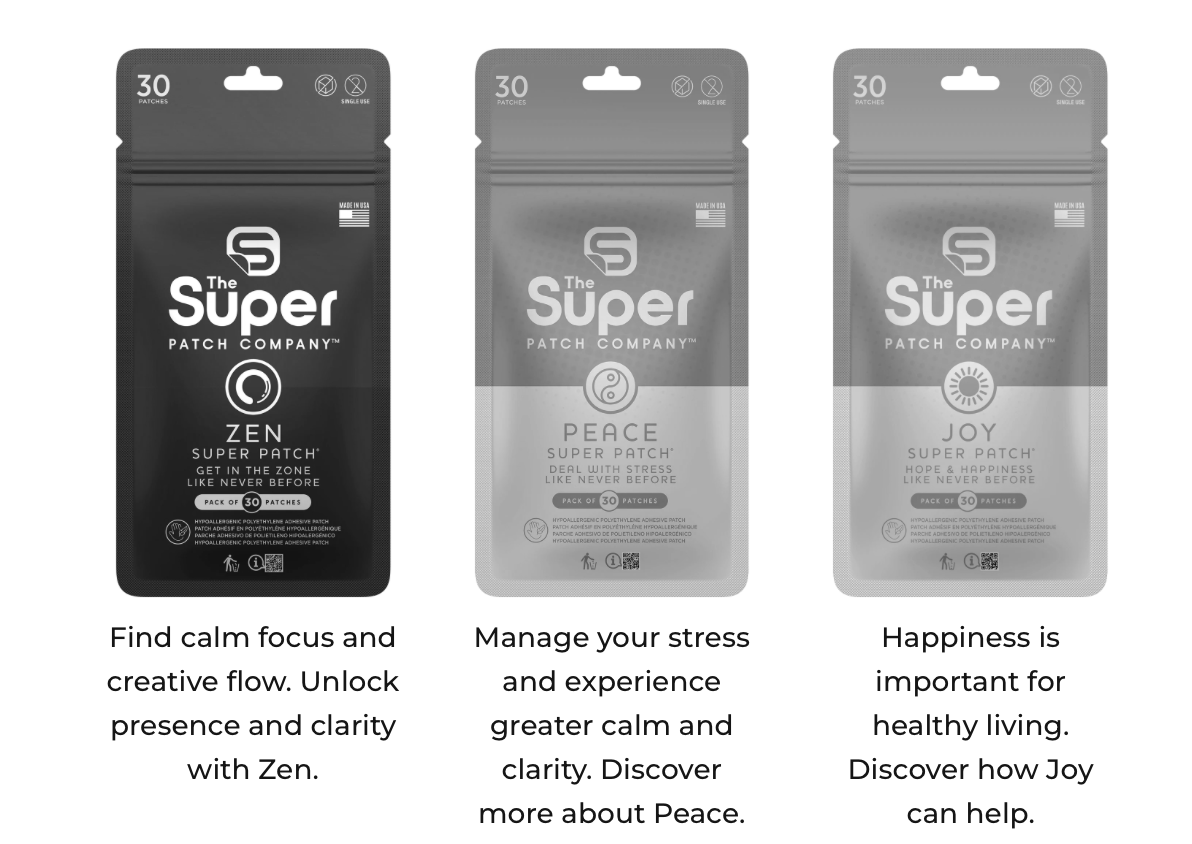
Try Super Patch with SherringSensorySignals
Conversation Starters
Coming Soon to a New Shop!!
SHERRINGENERGYTEEZ LINKTREE
©2026 Sherri A Nicholas All Rights Reserved
Categories: : Blog, Brain, haptic, Research Breakdown, Super Patch

A simple breakdown of the study results, what improved, and what still needs more testin
A simple breakdown of a small EEG study on haptic vibrotactile trigger technology.

Brief overview of The Case of Eden Energy Medicine (EEM) based on published review article. Part 3 of 3

The Wayne Cook Posture technique promotes relaxation, focus, and mental clarity.

Brief overview of The Case of Eden Energy Medicine (EEM):. Importance of case studies in understanding EEM’s potential. Part 2 of 3

Brief overview of The Case of Eden Energy Medicine (EEM) based on published review article. Part 1 of 3