
Doodle Teez or Blog
SherringenergyTeez is a creative endeavor to make a visual resource of energy medicine and this blog spot is a place to share information and stories with our personal journey to understanding energy medicine. Sharing everything energy and anything creative that makes remembering easier and fun. Doodle, Teez or Blog will be sometimes doodles, sometimes drawings, sometimes blogs, cheatsheets of energy techniques or research study breakdowns and wearable conversation starters with a some kind of energy connection. A place to learn how energy has a relationship in the physical world having a way to easily share.
Making energy visible is the goal and sharing is the vehicle ...

Study Breakdown:The PEACE Patch and VTT 2025
 Sherri A. Nicholas
The PEACE Patch, powered by haptic Vibrotactile Technology (VTT), significantly reduced anxiety and improved mental health in adults,
Can a Small Haptic Patch Help Lower Anxiety?
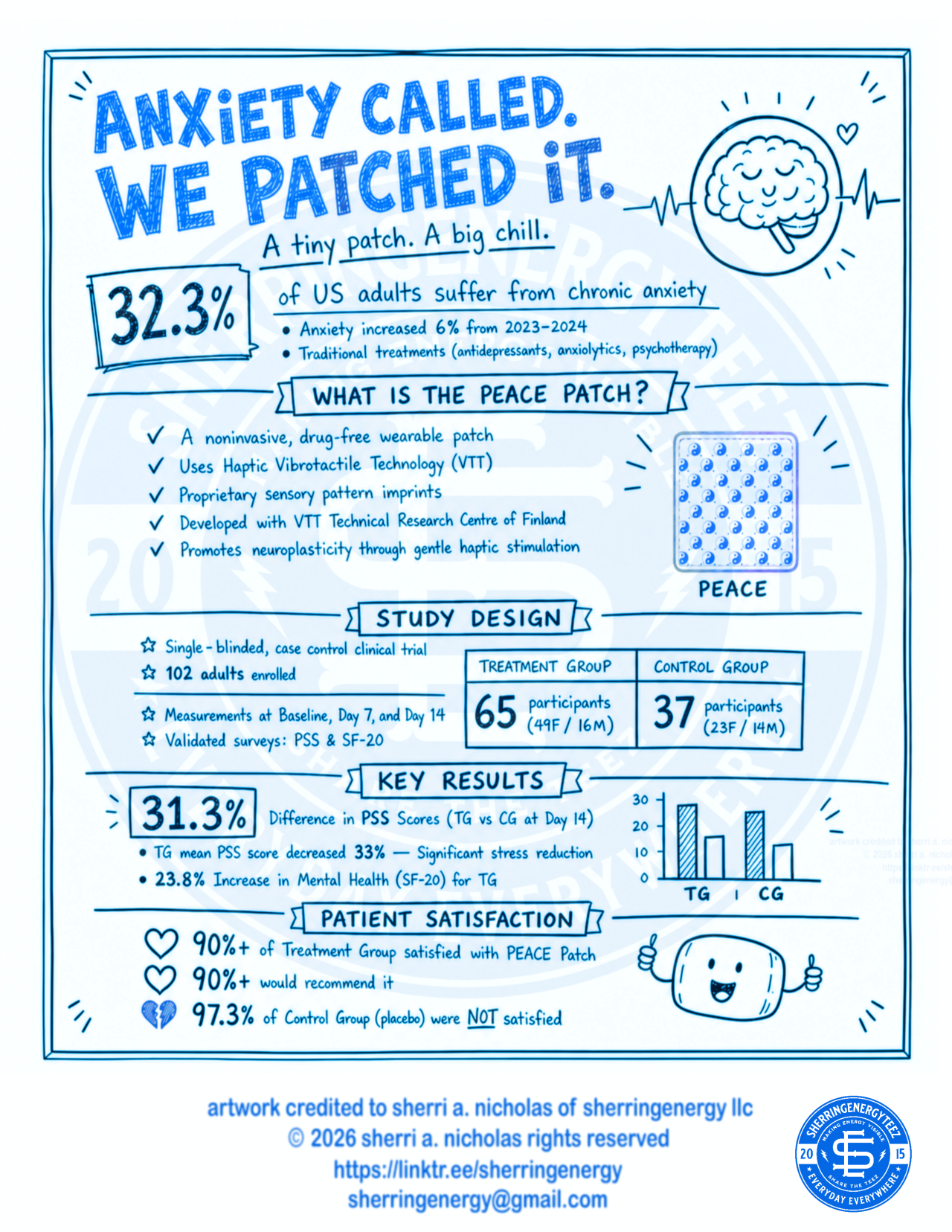
Chronic anxiety is a real public health issue, and this study says it affects about one-third of U.S. adults while also lowering quality of life. The usual treatments are medications and therapy, but the study points out that these do not work well for everyone, and some people struggle with side effects, access, or staying on treatment. That is why this study tested a different idea: a wearable patch using haptic Vibrotactile Trigger Technology, or VTT.
What is the PEACE Patch?
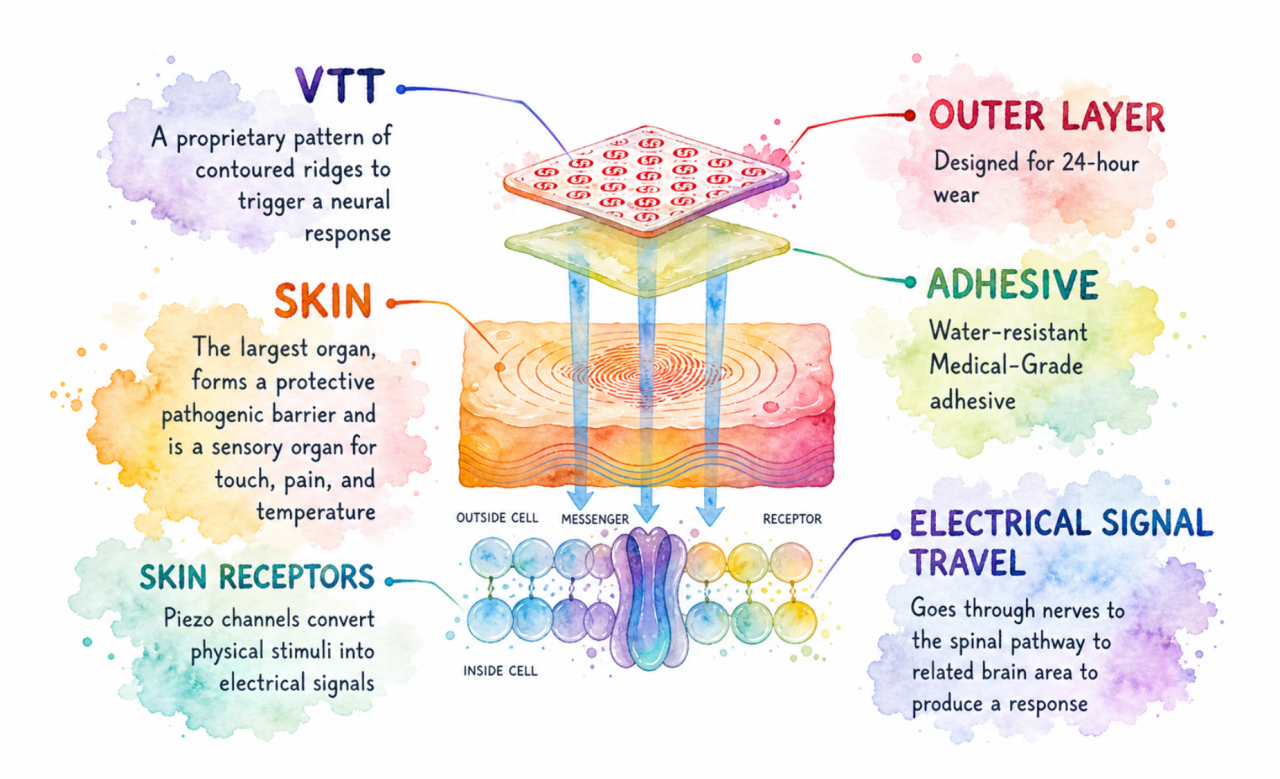
The PEACE Patch is a small, noninvasive, drug-free adhesive patch that can be worn on the forearm or any area with less hair for be adhesion. It does not contain medicine or a power source, but it does contain proprietary sensory pattern imprints that create the haptic VTT effect. The patch is meant to send a specific signals to the body, kind of like a gentle “reminder” to the nervous system, instead of using a drug.
The study tested whether this patch could help reduce stress and anxiety symptoms in adults.
How Studies Work
This was a single-blinded, case-control study and blinding refers to withholding treatment or group information from participants or researchers to reduce bias with 102 adults.
A single-blinded isan experiment where the participants do not know if they are receiving the real treatment or a fake placebo, but the researchers do
A case-control study is an observational design comparing people with a specific outcome or disease to a control group without it
- 65 people were in the treatment group and used the active PEACE Patch.
- 37 people were in the control group and used a placebo patch that looked the same but did not have VTT.
Participants completed two validated surveys:
- Perceived Stress Scale (PSS) [This simple test will measure the stress in your life using the Perceived Stress Scale (PSS)]
- Short Form-20 (SF-20) [The 20-Item Short Form Survey (SF-20) from the RAND Medical Outcomes Study was designed to facilitate group health comparisons.]
They filled out the surveys at baseline, day 7, and day 14.
Clear Drop in Stress Scores
The treatment group showed a clear drop in stress scores over 14 days. Their average PSS score went down by 33%, from 21.05 to 13.95, which moved them from moderate stress into the low-stress range. At day 14, the treatment group’s stress level was 31.3% lower than the control group.
The SF-20 results also improved for the treatment group. The mental health domain increased by 23.8%, from 64.2% to 79.5%. The health perception domain also improved, from 83.9% to 86.5%.
The control group did not show much change in stress or SF-20 scores over the same period.
Treatment Group vs Control Group
Most people in the treatment group liked it. More than 90% said they were satisfied, and about 90% said they would recommend it to family and friends In the placebo group, 97.3% of the control group said they were not at all satisfied, and only 3% said they would recommend it.
The study also reported no side effects or serious adverse events in either group.
Promising Drug-Free Option
The main takeaway is that the PEACE Patch with VTT may be a promising drug-free option for people living with chronic anxiety. It may also work as an add-on to existing care instead of replacing therapy or medication entirely.
This could matter especially for people who:
- do not respond well to standard treatment
- have side effects from medications
- have trouble accessing psychotherapy
- have trouble following self-care techniques
The researchers also suggest that haptic technology may be useful for other groups, including stroke survivors, people with traumatic brain injury, and those with neurodegenerative disorders, but they say more research is needed.
Small Repeated Signaling
Think of the nervous system like a busy classroom. If everyone is talking at once, it is hard to focus. VTT may work like a small, repeated signal that helps the brain notice a different pattern of touch and calm the “noise” a little. That is the basic idea behind using haptic input to influence stress and anxiety responses.
More Studies Are Definitely Needed
This study is encouraging, but it is not the final word. The researchers note that the results were based on self-reported surveys, which means they reflect how people felt and described their symptoms. They also say larger studies are needed, especially in different age groups and in people with other health conditions.
So the best way to read this study is: promising, but still early.
Conclusion: Safe, Easy and Well-liked
The PEACE Patch study suggests that a small haptic patch using VTT may help reduce anxiety and improve mental health scores in adults over 14 days. It was safe in this trial, easy to use, and well-liked by participants. At the same time, more research is always needed before it can be seen as a proven mainstream treatment.
Reference:
Decreased anxiety through haptic technology patch usage: A case-control comparison
Janet Fason 1, Jeffrey Gudin 2, Peter Hurwitz 3,✉
6a96e2d1e63e3_lg.png)
Super Patch Blogs
Find Your Super Patches - Quiz
Try Super Patch with SherringSensorySignals
Super Patch Conversation Starters
SHERRINGENERGYTEEZ LINKTREE
©2026 Sherri A Nicholas All Rights Reserved
Categories: : Blog, Brain, Doodle, Research Breakdown, Super Patch
The PEACE Patch, powered by haptic Vibrotactile Technology (VTT), significantly reduced anxiety and improved mental health in adults,
PEACE Patch offers user-friendly, and effective approach to managing anxiety—backed by promising clinical data and high and high user s ...
What Happens to the Brain When You Wear a Vibrotactile Sleeve? A simple breakdown of a small EEG study on haptic vibrotactile trigger ...
The three wellness approaches I use regularly are Eden Energy Medicine, LifeWave, and Super Patch...
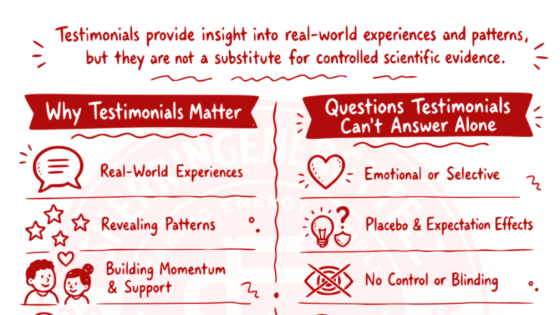
Testimonials are a huge part of the wellness world, and especially of network marketing culture . They help create momentum ...
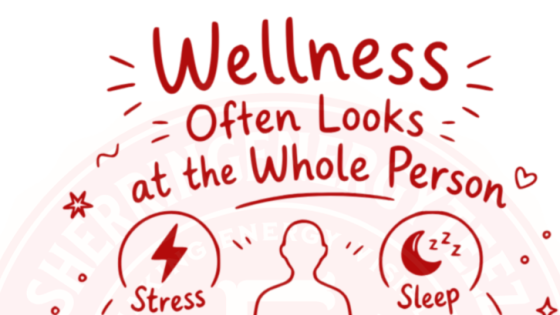
One of the things the wellness industry gets right, when it is operating at its best, is that it often looks at the whole person instead of ...